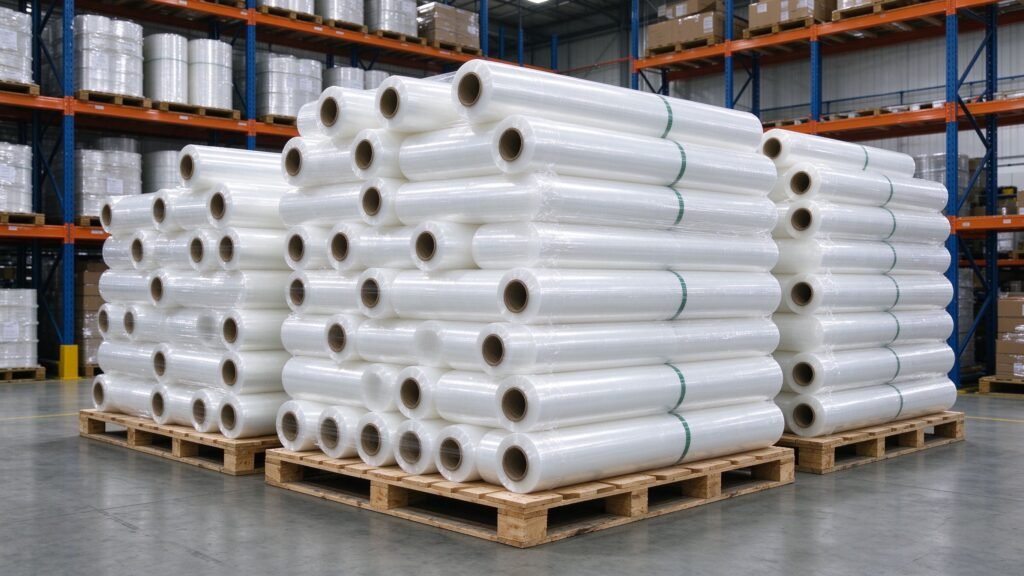
PE shrink film is a precision packaging material. How you store and handle it before it goes on your packaging line directly affects whether it runs smoothly or causes headaches like film blocking, wrinkles, poor shrinkage, and broken rolls.
Why Storage Conditions Matter
Polyethylene is sensitive to temperature, humidity, and time. Film rolls that are stored improperly can:
- Block (stick together) — Layers of film fuse, making the roll impossible to unwind
- Lose shrink performance — Heat history can reduce the film’s shrink ratio
- Absorb moisture — Causes poor sealing and cloudy appearance
- Deform or crush — Rolls lose their cylindrical shape, causing tracking issues
- Accumulate dust and dirt — Ends up on the finished package
Ideal Storage Environment
| Condition | Recommended Range |
|---|---|
| Temperature | 18–25°C (64–77°F) |
| Humidity | 40–60% RH |
| Direct sunlight | Avoid entirely |
| Heat sources | Keep away from radiators, heaters, ovens |
| Floor | Off concrete on pallets, not directly on floor |
| Stack height | Follow pallet stacking guidelines |
Do Not Store Near
- Shrink tunnels and heat tunnels — Radiated heat pre-shrinks the film
- Direct sunlight through windows — UV and heat degrade PE
- Wet or damp floors — Moisture damages the roll cores and film edges
- Chemical solvents or oils — Can cause film degradation or contamination
- Forklift traffic zones — Risk of impact damage
Handling Rolls on the Line
Before loading onto the machine:
- Let the roll acclimate to the line room temperature for at least 24 hours if it was stored in a cold area. Condensation forms on cold film when it meets warm humid air.
- Inspect the roll for damage: crushed edges, loose winding, water stains, or visible blockage.
- Check the core for cracks or deformation. A damaged core causes wobble and tracking problems.
During loading:
- Use core plugs or shafts that fit the 3-inch core properly. A loose shaft causes wobble.
- Load the roll so the film unwinds in the correct direction (usually unwind from the bottom, but check your machine orientation).
- Do not drop rolls. Impact damage creates internal winding defects that show up as tracking problems later.
Shelf Life
PE shrink film does not have an expiration date in the traditional sense, but its performance gradually changes over time.
- Best performance: Within 6–12 months of production
- Acceptable: 12–18 months, provided storage conditions are good
- Beyond 18 months: Shrink ratio may decrease, blocking risk increases
First In, First Out (FIFO) — Always use the oldest roll first. Label each roll with its arrival date.
Common Storage Problems and Fixes
Film blocks (layers stick together):
Caused by storing in high temperatures or stacking heavy pallets on top. Fix: store in cooler conditions, do not over-stack, use FIFO.
Roll has flat spots or is oval:
Caused by heavy stacking or leaning rolls against walls. Fix: store rolls vertically on pallets, not on their sides.
Edges are wavy or baggy:
Caused by moisture absorption or poor humidity control. Fix: keep humidity controlled, use film within reasonable time.
Core is cracked or crushed:
Caused by rough handling or over-weight stacking. Fix: handle rolls carefully, do not stack heavy pallets on light rolls.
Warehouse Checklist
- [ ] Film stored at 18–25°C
- [ ] No direct sunlight
- [ ] Rolls on pallets, not on floor
- [ ] No heat sources nearby
- [ ] FIFO rotation practiced
- [ ] Rolls not leaning against walls
- [ ] Stack height within limits
- [ ] Acclimation time allowed before use
- [ ] Each roll inspected before loading
- [ ] Damaged rolls quarantined
Good Storage = Better Line Performance
Most “film quality problems” that packaging operators complain about are actually caused by poor storage and handling, not by the film itself. A roll that has been stored correctly, acclimated properly, and loaded carefully will run more consistently, shrink more evenly, and produce better-looking packages.
Need help specifying the right film for your line? [Contact us](/contact/) with your packaging details.