Why Marble and Stone Need Specialized Protection
Marble, granite, travertine, and engineered stone are the most expensive flooring materials on most projects. They are also the most sensitive. Marble etches from acidic spills, scratches from any grit, and stains easily. Once damaged, restoration costs are high and sometimes impossible. Stone floor protection film is the insurance policy that keeps premium surfaces flawless until handover.
How Stone Protection Film Works
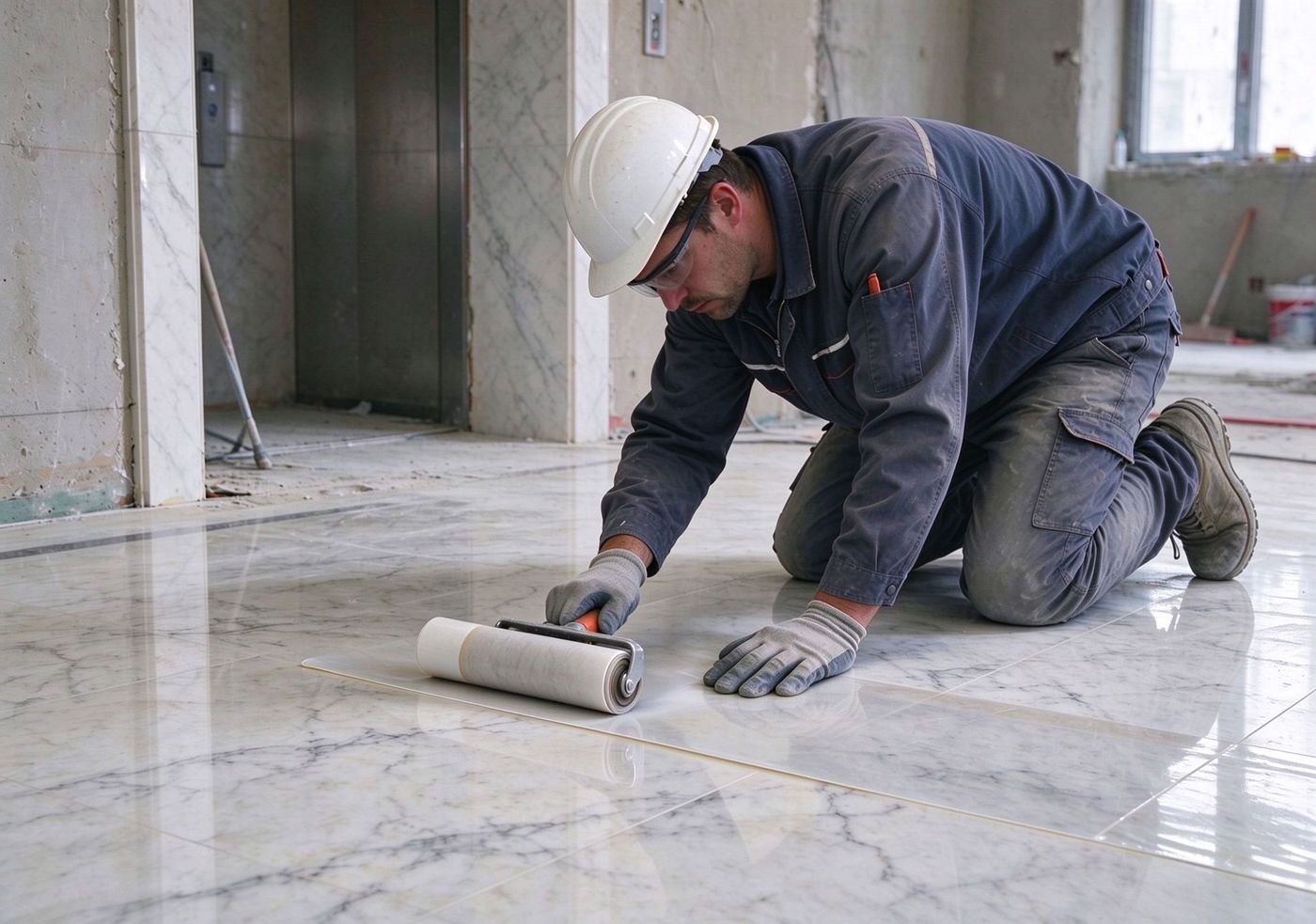
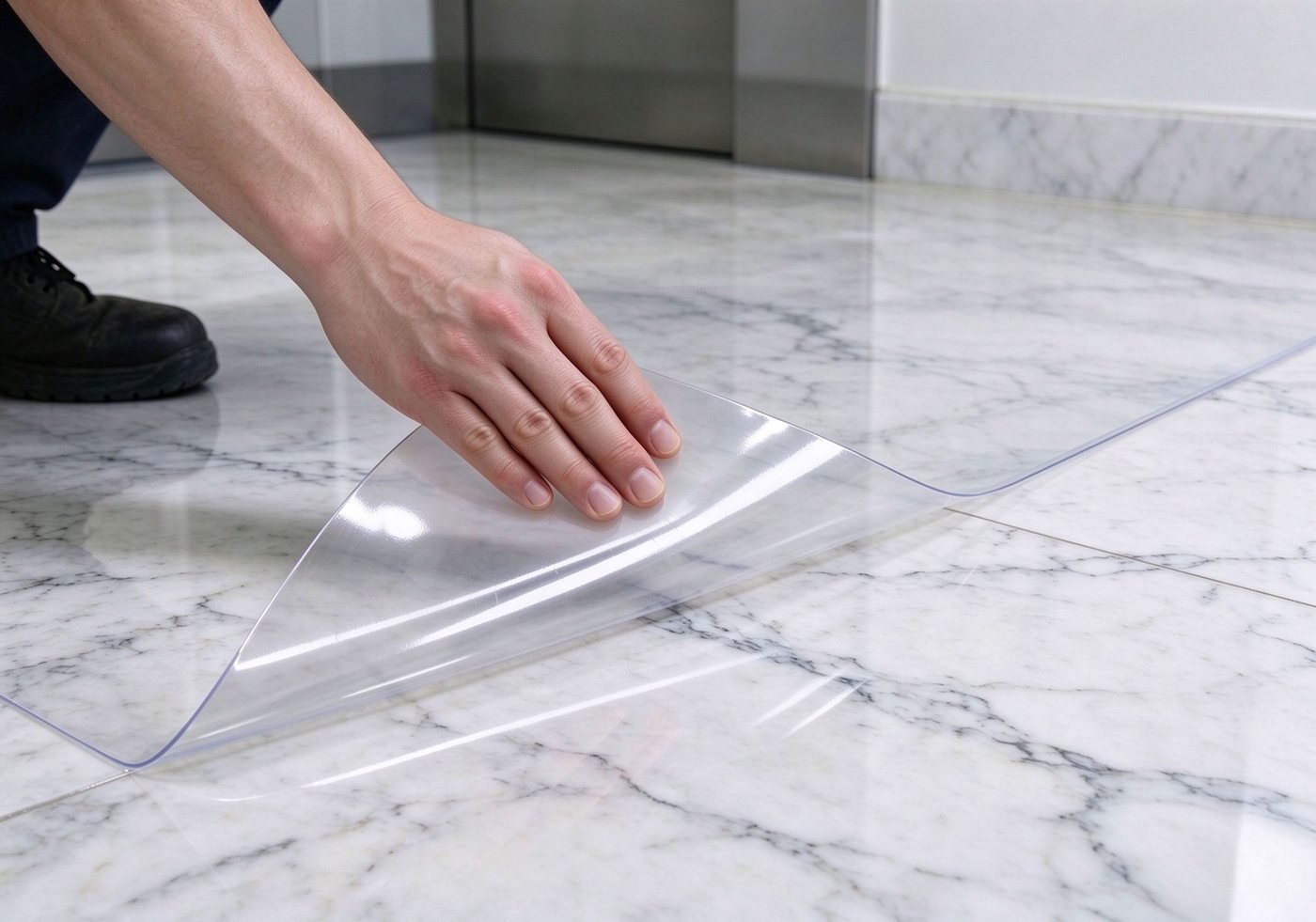
High-grade stone protection film combines a thick, tough PE base with a gentle adhesive system that bonds securely to the polished surface but releases cleanly without residue. Some grades are adhesive-free and rely on static and mechanical grip, ideal for highly polished and honed surfaces where even light adhesive could affect the finish.
Where Stone Protection Is Essential
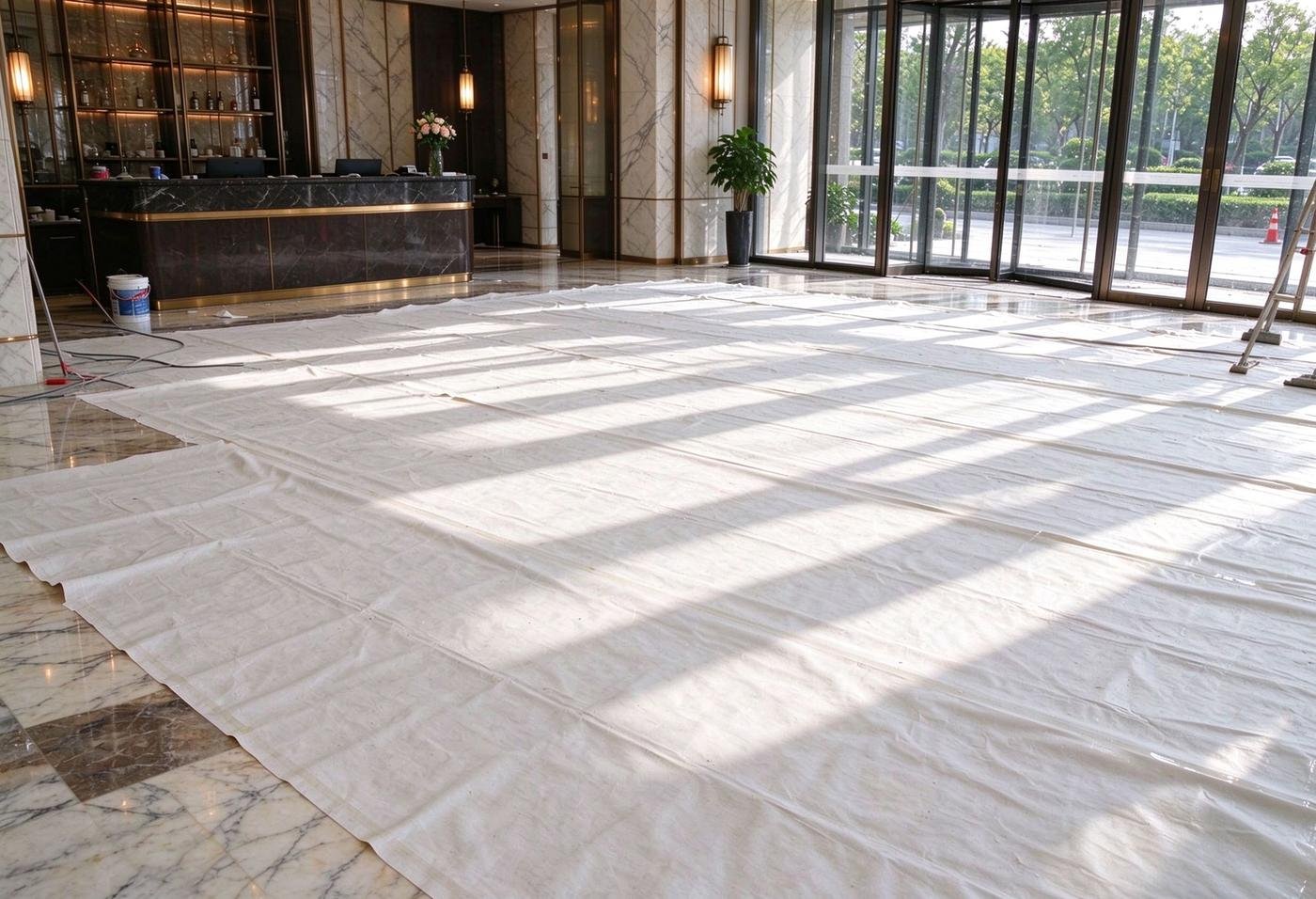
Hotel lobbies, airport terminals, luxury residences, and office atriums install stone floors months before opening. During that period, the floor must survive scaffolding, foot traffic, furniture installation, and cleaning. Film protects the surface so the final polishing and handover reveal a floor in untouched condition.
Choosing Film for Stone Surfaces
Polished Marble
Requires adhesive-free or ultra-light-tack film. Never use medium or heavy tack on polished stone, as adhesive transfer can be nearly impossible to remove.
Honed and Textured Stone
Honed marble and textured granite can accept light-to-medium tack film. The rougher surface helps the film grip.
Outdoor Stone
Outdoor paving and cladding need UV-resistant, weatherproof film that withstands heat, rain, and long exposure without degrading.
Best Practices for Stone Projects
Apply film only after the floor is sealed and fully cured. Use a dust-free application to avoid trapping grit under the film. For high-traffic areas, cover film seams with anti-slip tape. Remove film within 30–60 days depending on the grade, and always verify clean removal on a sample first.
FAQ
Will film prevent etching from acid spills? Film protects against most spills. Acid can still attack the stone at film edges or damaged areas, so wipe spills promptly and keep seams sealed.
Can film be used on unsealed stone? It is safer to seal first. Film on unsealed porous stone may trap moisture and cause discoloration.
How long can stone film stay on? Premium grades handle 60–90 days. Longer periods require regular inspection for adhesive aging.
Explore our floor protection film manufacturing solutions for stone-safe, residue-free protection grades.