Why Adhesion Level Is the Most Important Specification
Adhesion level determines whether protective film stays on during processing, whether it removes cleanly afterward, and whether it leaves marks on sensitive surfaces. Choose too little adhesion and the film lifts at edges and folds. Choose too much and the film damages the surface or leaves residue. Getting this one specification right solves most protective film problems in manufacturing.
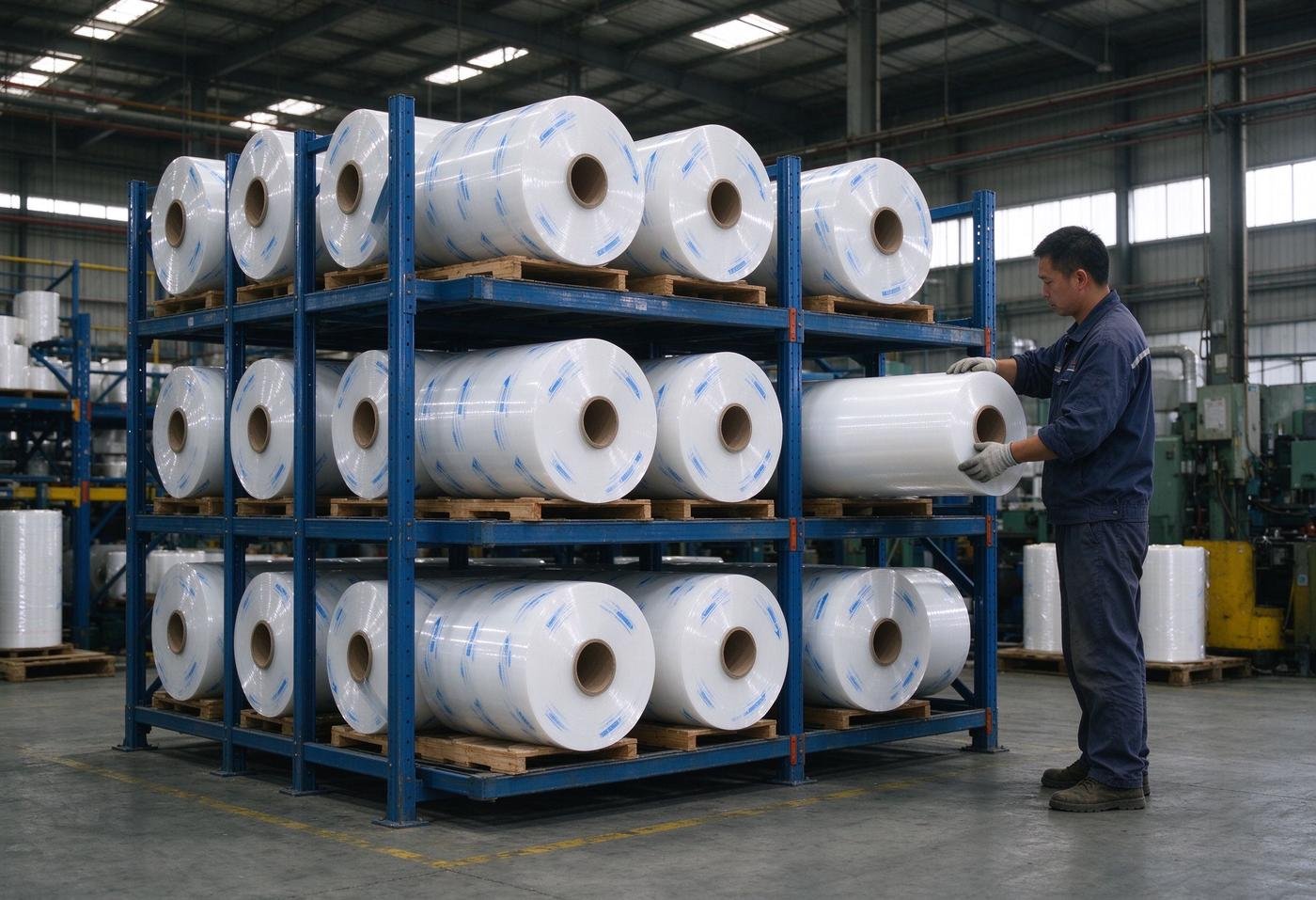
Understanding Tack and Peel Strength
Tack is the initial stickiness of the film when first applied. Peel strength (measured in g/cm or N/25mm) is the force required to remove the film after it has bonded. Film adhesives are classified into light, medium, and heavy tack ranges. Peel strength changes over time and temperature: it rises as the film ages on the surface, which is why short-term and long-term applications need different grades.
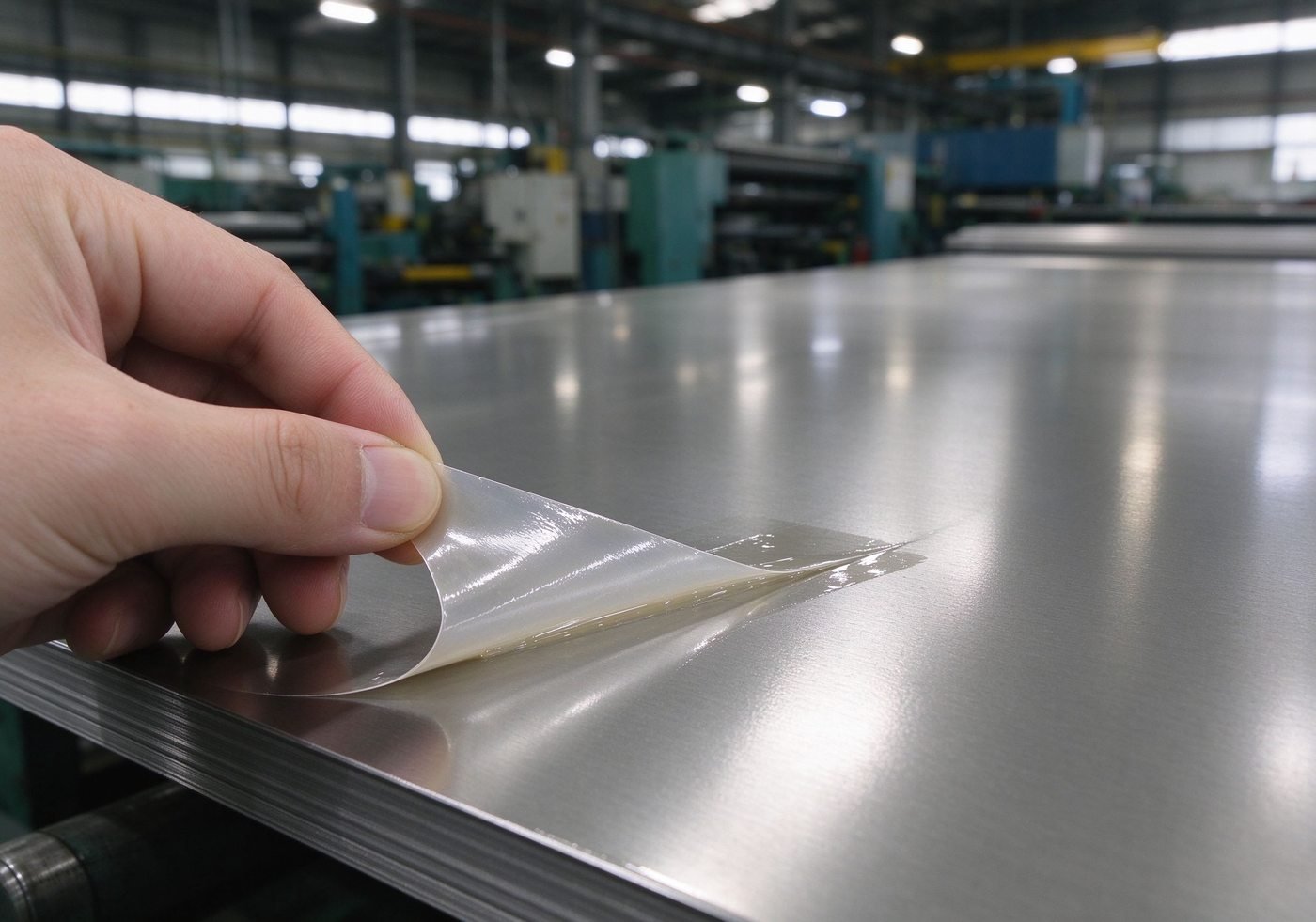
Matching Adhesion to Your Application
Light Tack (3–20 g/cm)
Best for polished, coated, and painted surfaces where zero residue and zero ghost marks matter: mirror finishes, anodized aluminum, coated glass, and optical acrylic. Suitable for short protection cycles from days to a few weeks.
Medium Tack (20–80 g/cm)
The workhorse range for general metal, plastic, and wood surfaces. Survives cutting, bending, stamping, and transport for weeks to months while still peeling cleanly. Most blue masking film falls in this range.
Heavy Tack (80–200+ g/cm)
For textured, powder-coated, or rough surfaces where light film cannot hold. Also used for long-term protection (6–12 months) and demanding forming operations. Confirm removal within the recommended window.
Testing Adhesion Before You Buy
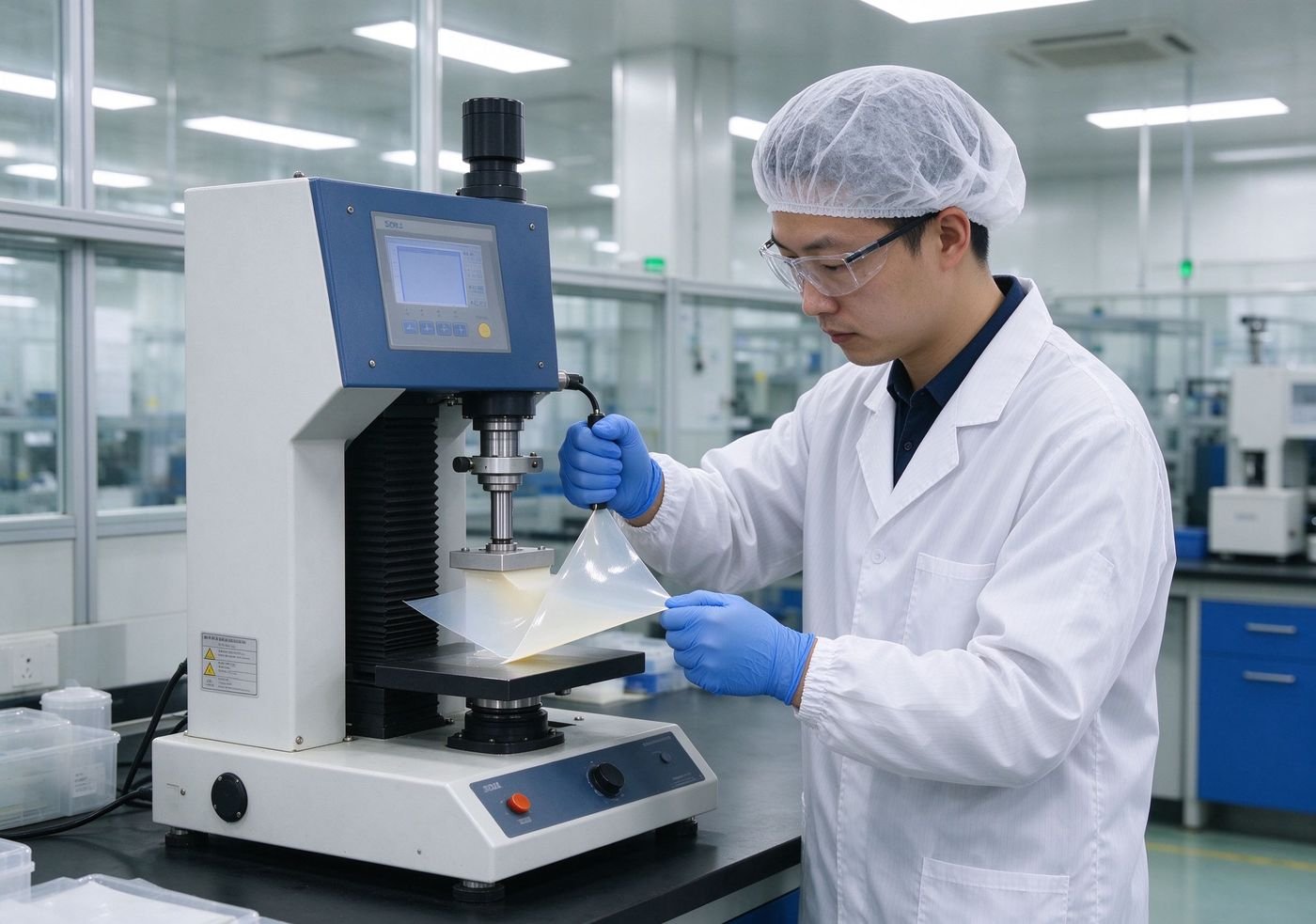
Run three tests on your actual substrate: immediate peel strength, peel strength after 30 days, and peel strength after 60 days including heat exposure. Inspect the surface for residue, ghost marks, and surface dulling after removal. Repeat the test on a second batch to confirm consistency, because adhesive performance can vary between production runs.
Special Cases
Coated glass and Low-E glass require static cling or specially formulated low-tack adhesives. Powder-coated surfaces with high texture need heavy tack plus a thicker film base. Outdoor storage demands UV-resistant film and adhesives that do not degrade into residue under sunlight.
FAQ
Does higher adhesion always mean better protection? No. Excess adhesion creates residue and surface damage. Match adhesion to the surface and process, not maximization.
Why does film become harder to peel over time? Adhesive bonds strengthen with time and temperature. Use shorter storage cycles or a lower-tack grade for long storage.
Can one film grade serve all my products? Rarely. Most manufacturers standardize on two or three grades: light tack for finished surfaces, medium tack for processing, heavy tack for rough or long-term use.
Explore our surface protective film manufacturing solutions and let us help you match adhesion to your exact surface and process.