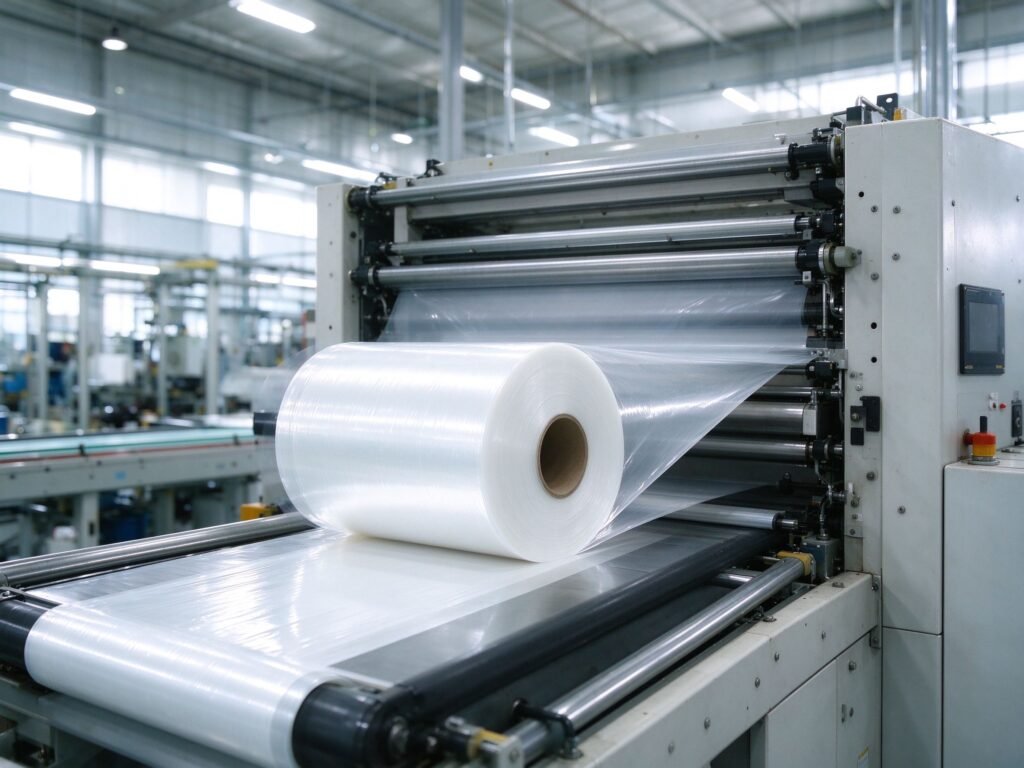
PE shrink film breaks most often because of uneven film thickness, poorly wound rolls, or incorrect shrink tunnel temperature. If your line experiences frequent breaks, check roll edge alignment, thickness consistency, core fit, tunnel temperature, and film storage conditions first.
The Cost of Film Breakage
On a high-speed beverage line running 30–60 bundles per minute, each stoppage costs 5–15 minutes of lost production plus scrap. More than 2–3 breaks per shift means something is systematically wrong.
7 Root Causes of Film Breakage
1. Thickness variation (most common): Film varying more than ±5% creates weak spots. Use rolls with certified thickness tolerance.
2. Poor roll winding: Wavy edges or off-center rolls cause sideways tracking. Look for end-face deviation ≤±1.5mm and constant-tension winding.
3. Core size mismatch: Loose cores cause wobbling. Standard 3-inch (76mm) cores need ≤±0.5mm tolerance.
4. Wrong tunnel temperature: Too hot burns film; too cold causes tearing. 40–50μm runs at 150–160°C; 60–80μm at 160–170°C; 100μm+ at 170–180°C.
5. Film blocking: Stuck layers from warm winding or hot storage. Store rolls below 25°C.
6. Sharp product edges: Increase thickness for sharp-edged products like cartons and metal parts.
7. Poor roll joints: Standard rolls have up to 2 joints. For critical high-speed lines, request seamless rolls.
Troubleshooting Checklist
- Where does it break? Seal bar? Tunnel? Unwinding?
- Does it always break at the same spot? Check for thin areas or bad joints.
- Did it start after changing suppliers? New film may need different tunnel settings.
- Does it happen more in summer? Heat causes blocking.