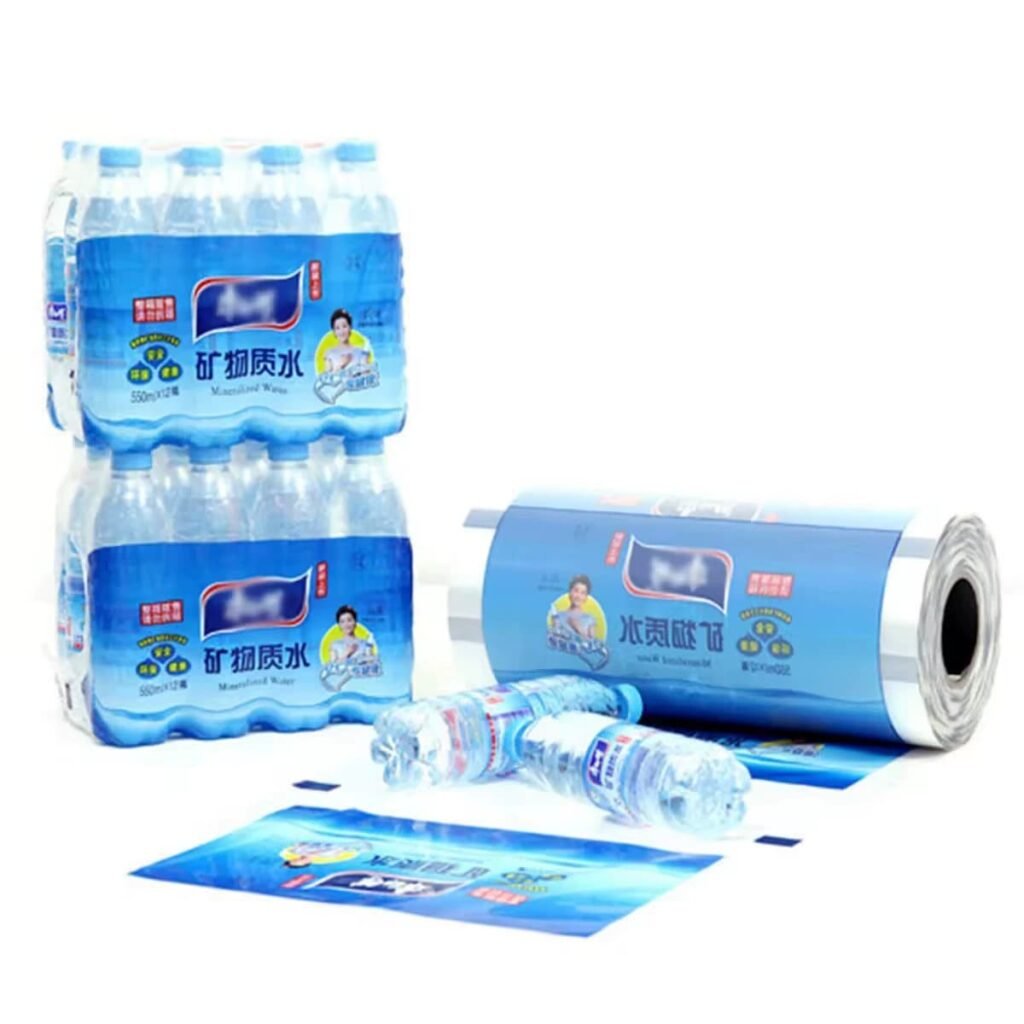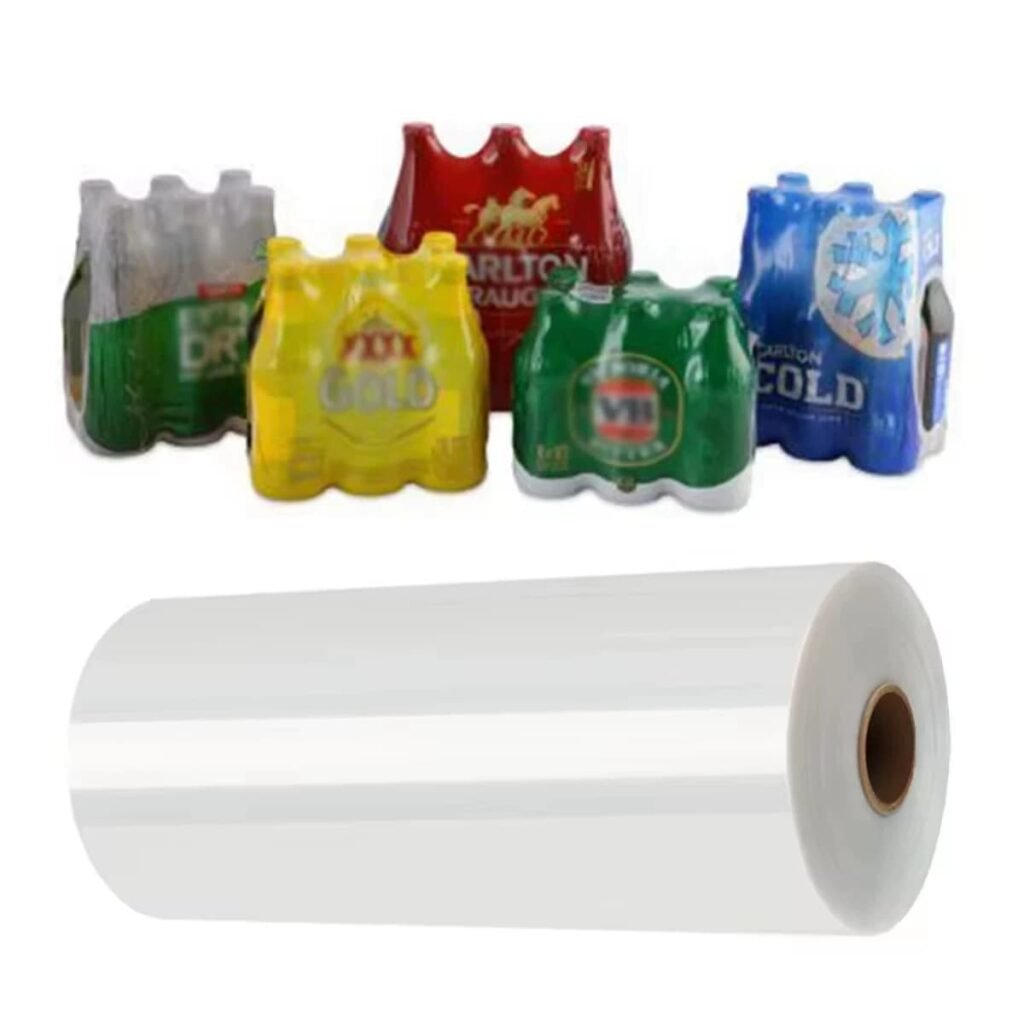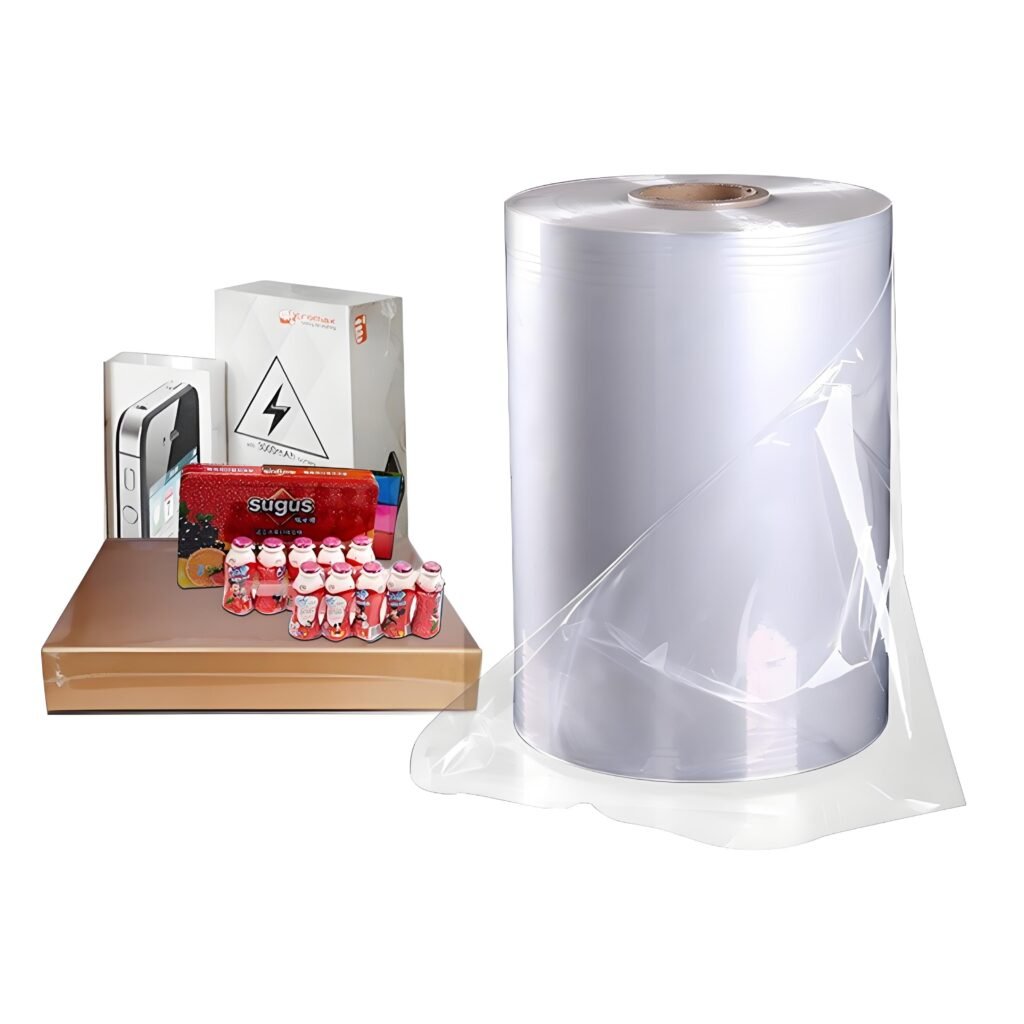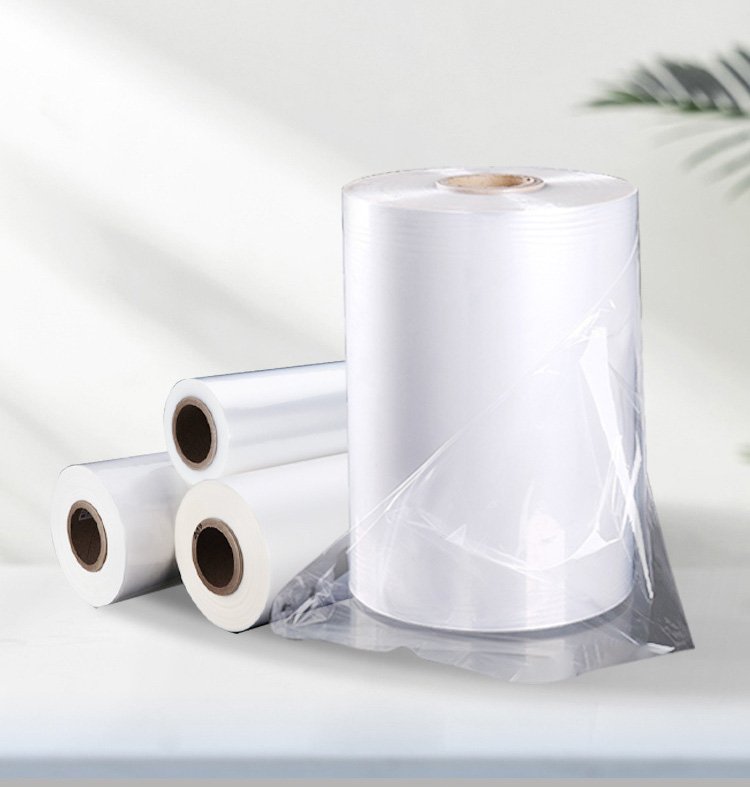
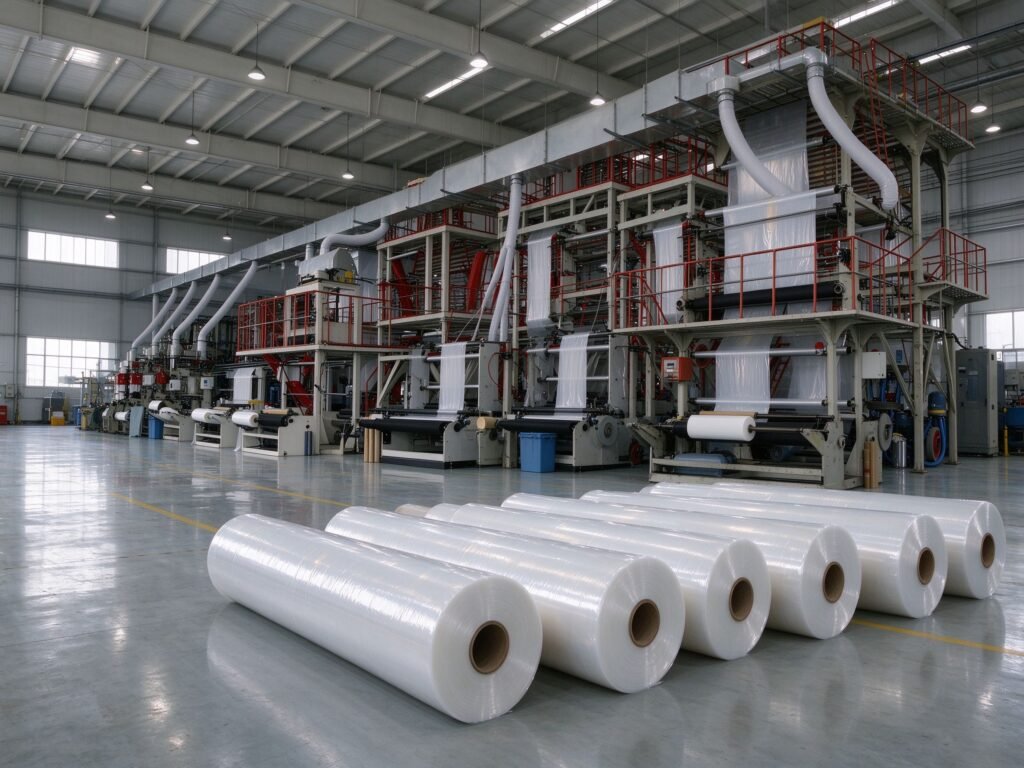
Choose PE shrink film for bottled water, beverage multipacks, cartons, and heavy industrial products. It is stronger and more puncture-resistant. Choose POF shrink film for crystal-clear retail packaging of lightweight consumer goods where appearance matters more than raw strength.
Side-by-Side Comparison
| Factor | PE Shrink Film | POF Shrink Film |
|---|---|---|
| Typical thickness | 30–200μm | 12–30μm |
| Shrink temperature | 150–180°C | 120–160°C |
| Puncture resistance | Excellent | Good |
| Clarity | Good | Excellent |
| Best for | Beverages, industrial, heavy loads | Retail, lightweight consumer goods |
| Cost | Lower per kg | Higher per kg |
When PE Shrink Film Is Better
Beverage multipacks: Bottled water, soft drinks, and beer cans packed 6/12/24 need film that holds weight through shipping. PE’s puncture resistance means fewer broken bundles.
Industrial packaging: Machinery parts, building materials, and large cartons with sharp edges need 80–200μm film that POF cannot match.
High-speed automatic lines: PE rolls with ≤±5% thickness tolerance and constant-tension winding reduce downtime.
When POF Shrink Film Is Better
Retail display: POF’s crystal clarity is standard for consumer electronics, gift sets, and shelf-facing products.
Lightweight goods: Small items don’t need PE’s heavy-duty strength. POF’s thinner gauge means less material cost.
Can You Use Both?
Many operations use PE for shipping bundles and POF for individual retail packaging. For example, a water bottler uses PE for 24-pack shipping and POF for retail-ready multipacks.
Common Questions
Can I run both on the same shrink tunnel? Yes, but adjust temperature: POF runs cooler (120–160°C) than PE (150–180°C).
Is PE recyclable? Yes, through standard plastic film recycling streams.