Why Glass Needs Protective Film
Glass is strong against pressure but extremely vulnerable to scratches. A single abrasive particle sliding between stacked panes can ruin an expensive sheet. Glass protective film is applied at the production line and stays on through cutting, tempering logistics, edge grinding, storage, and final installation. It is one of the most cost-effective quality measures a glass processor can take.

Types of Glass Protection Film
PE Film for Annealed and Tempered Glass
Standard PE protective film with light-to-medium tack protects float glass, tempered glass, and laminated glass during handling and transport. It is economical and easy to apply with automatic laminators.
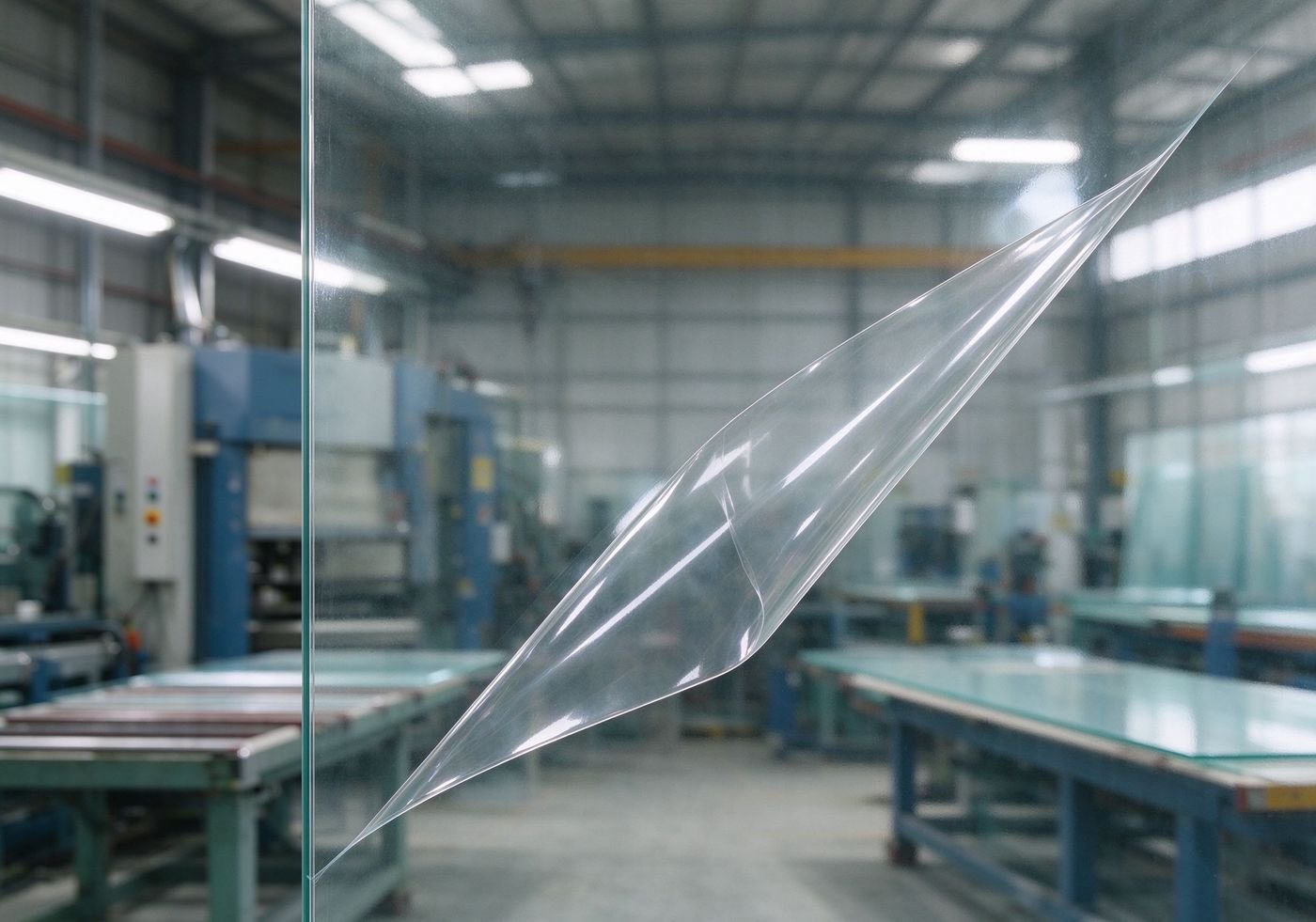
Static Cling Film for Coated and Treated Glass
Low-emissivity (Low-E) coated glass and glass with special surface treatments must avoid adhesive contact. Static cling film provides protection with zero adhesive, preserving the coating chemistry.
Heavy-Duty Film for Processing
For glass that will be cut, drilled, or edge-ground, thicker film with medium tack survives the processing line, then remains as transport protection until installation.
Applications Across the Glass Industry
Architectural glass processors protect curtain wall panels, windows, and doors from fabrication to site installation. The furniture industry protects glass tabletops and shelves during assembly and delivery. In the automotive sector, windshields, side windows, and sunroofs ship with film until installation in the vehicle. The appliance industry uses glass film on oven doors, refrigerator shelves, and display panels.
Selection Guide for Glass Film Buyers
Match the film to the glass type, the process it must survive, and the storage environment. Coated glass demands static cling or specially formulated low-tack films. Long warehouse storage in warm climates requires UV-resistant grades with stable adhesive. For automatic application, confirm the film unwinds cleanly on your laminating equipment and does not leave adhesive bleed at the edges when stacked.
Installation Best Practices
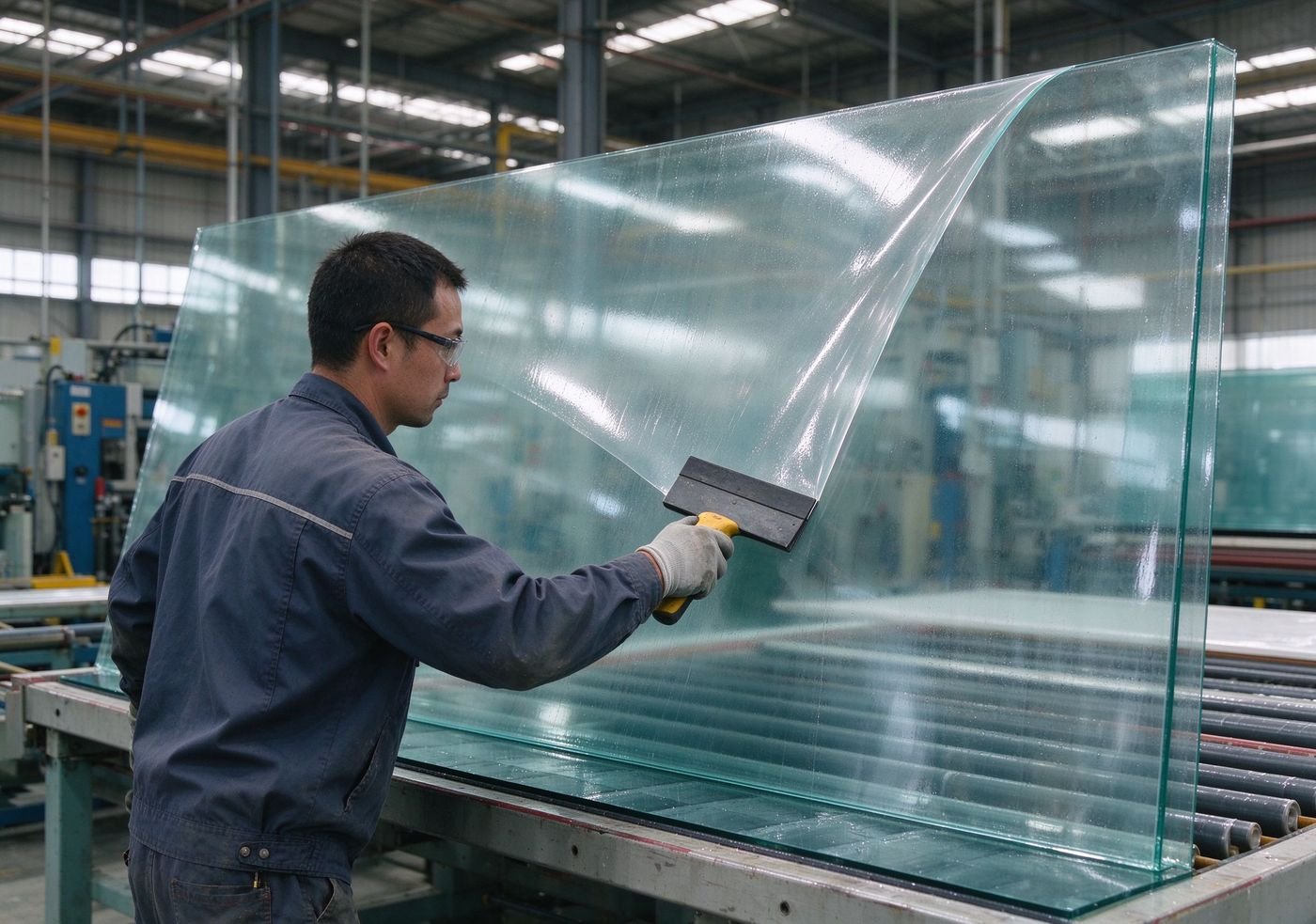
Glass must be clean and dry before lamination. Apply film in a dust-controlled environment, and store protected glass upright in racks with edge cushioning so film edges do not pick up debris. Remove film within the supplier-recommended window to avoid adhesive aging.
FAQ
Will film protect tempered glass during cutting? Cutting happens before tempering in most processes. Film protects the finished surface after tempering, during logistics and installation.
Does glass film yellow in sunlight? Standard PE film can yellow after prolonged UV. UV-stabilized grades maintain clarity for outdoor storage.
Can film be applied to curved glass? Yes, with a flexible film grade and controlled application tension. Confirm conformability with a sample test.
Explore our surface protective film manufacturing solutions for glass-grade film with validated residue-free removal.