The Cosmetic Defect Problem in Appliance Manufacturing
Refrigerators, washing machines, ovens, and air conditioners are bought on appearance. A scratch on a door panel, a fingerprint on a display, or a scuff on a side panel can reject a finished unit at final inspection. Appliance manufacturers use protective film at every stage: on incoming metal and plastic panels, during stamping and bending, through assembly, and until the unit reaches the retail floor.
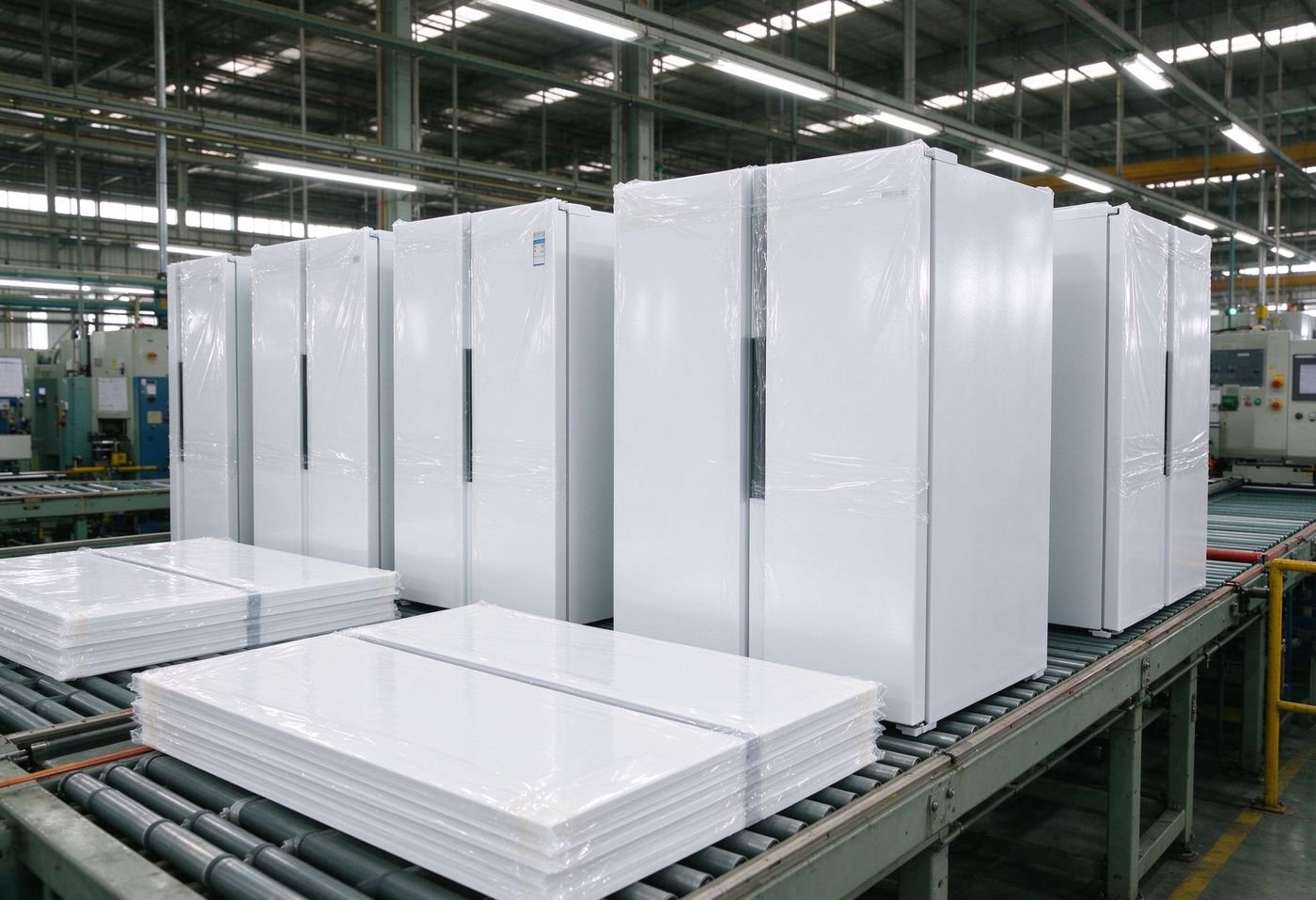
Where Appliance Film Is Applied
Painted and Coated Metal Panels
Pre-painted steel and aluminum panels for doors, wrappers, and liners carry film from the coil stage. The film survives stamping, embossing, and bending while keeping the painted surface flawless.

Plastic Components and Displays
Control panels, display windows, and decorative trim are molded and then printed. Film protects these surfaces through assembly and packaging, and is peeled off by the final user with an easy-peel tab.
Stainless Steel Appliance Finishes
Fingerprint-resistant stainless finishes still scratch. Film protects the finish during handling, and installers remove it at the customer’s home or store.
Choosing Film for the Appliance Industry
Appliance production runs at high speed, so film must apply smoothly on automated laminators, unwind without static issues, and cut cleanly to panel size. Light-to-medium tack is typical so the film peels cleanly after weeks of storage. Some panels are formed after lamination, so the film must stretch without lifting or cracking. For outdoor display units, UV-resistant grades prevent discoloration.
Cost Benefits of Consistent Film Use
Each cosmetic rejection costs far more than the film itself when rework, logistics, and brand damage are counted. A film cost of a few cents per panel routinely eliminates dozens of rejections per production shift. Many manufacturers also print their brand logo or quality instructions on the film, turning a protection layer into a finishing touch customers see.

FAQ
Does appliance film leave residue? With the correct adhesive matched to the panel coating and removal timing, no. Validate with aging tests on each panel type.
Can film survive the forming process? Yes, when you specify a formable grade with the right stretch properties and confirm it in trials.
How is film removed by the end user? Most appliance films include an easy-peel tab or colored edge, letting customers remove the film cleanly without tools.
Explore our protective film manufacturing capabilities for appliance-grade film supplied in die-cut panels, rolls, or custom widths.