The Challenge of Protecting Acrylic Sheets
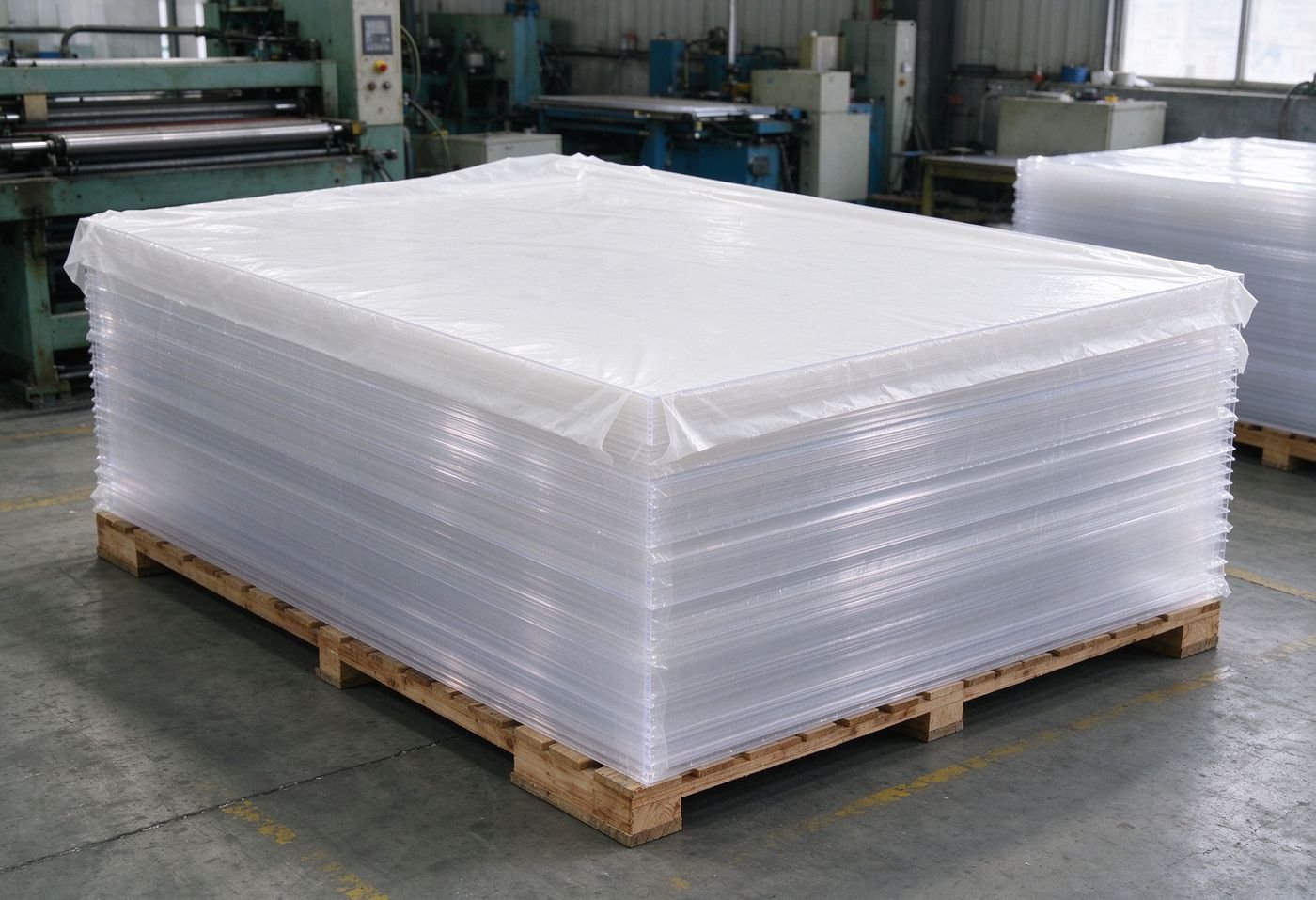
Acrylic (PMMA) sheet is valued for optical clarity, but it is also one of the easiest materials to scratch. Dust, tool contact, and sheet-to-sheet friction during stacking and transport leave visible marks that cannot be polished away easily. Acrylic sheet protective film exists for one purpose: to keep the surface optically perfect until the customer peels it off.
How Acrylic Film Is Made and Applied
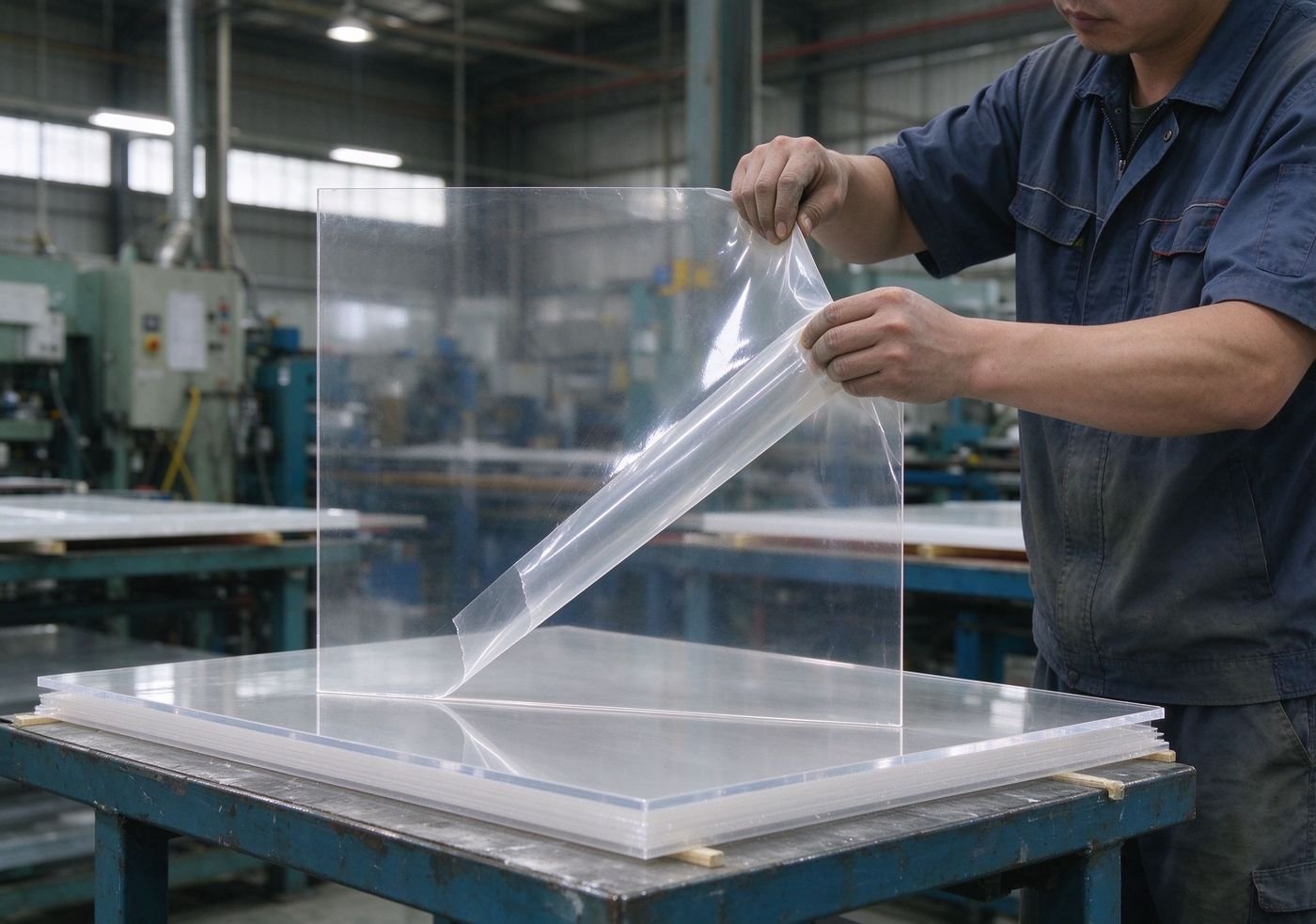
Protective film for acrylic is typically a PE or PET base coated with a low-to-medium tack adhesive that is gentle on the sensitive acrylic surface. It is applied in-line as the sheet emerges from extrusion or casting, protecting it immediately. Some grades use static cling for ultra-sensitive optical applications where even light adhesive could alter surface chemistry.
Applications Across the Acrylic Industry
Signage manufacturers protect cut acrylic letters and panels during CNC routing and painting. Furniture makers keep tabletops and display stands scratch-free through assembly. In the automotive and appliance industries, acrylic windows, dials, and covers ship with film that protects through installation. The aquarium and display industries use film on cast acrylic where clarity and zero-residue removal are non-negotiable.
Choosing the Right Film for Acrylic
Optical-grade acrylic needs a film with low haze so the sheet can still be inspected through the film. Extruded acrylic typically accepts light-tack adhesive film; cast optical acrylic may prefer static cling or silicone-based low-tack systems. If the sheet will be thermoformed or laser-cut, choose film that stretches without delaminating and check whether the adhesive withstands process heat. For long storage, avoid films that could leave ghost marks on polished edges.
Common Mistakes and How to Avoid Them
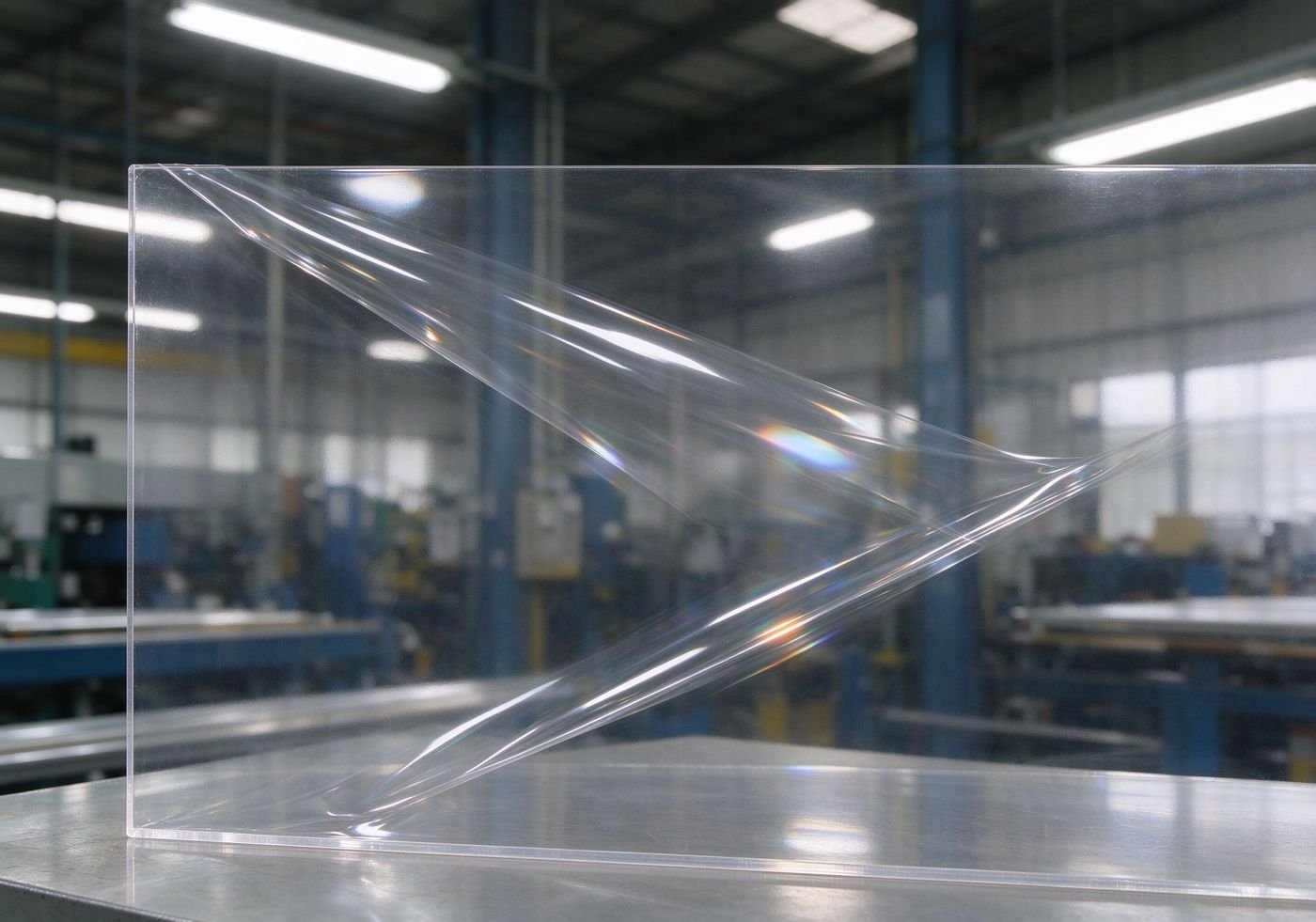
The most common mistake is choosing a film with too much tack for acrylic, which causes residue or surface dulling after removal. The second is leaving film on too long in warm storage, which makes adhesive bond harder. Always run a peel test on the exact acrylic grade you use, aged for at least 60 days.
FAQ
Is acrylic film reusable? No. Once removed and re-applied, dust contamination reduces adhesion and clarity. Use fresh film for final protection.
Can the film be printed with logos? Yes, many buyers print brand names or installation instructions on the film for their end customers.
Does acrylic film protect against UV? The film protects against scratches and dirt. For UV protection of the acrylic itself, choose UV-stabilized acrylic or add a UV-filtering film grade.
Explore our protective film manufacturing capabilities for optical-grade film that keeps your acrylic sheets flawless.