The Residue Problem in Metal Fabrication
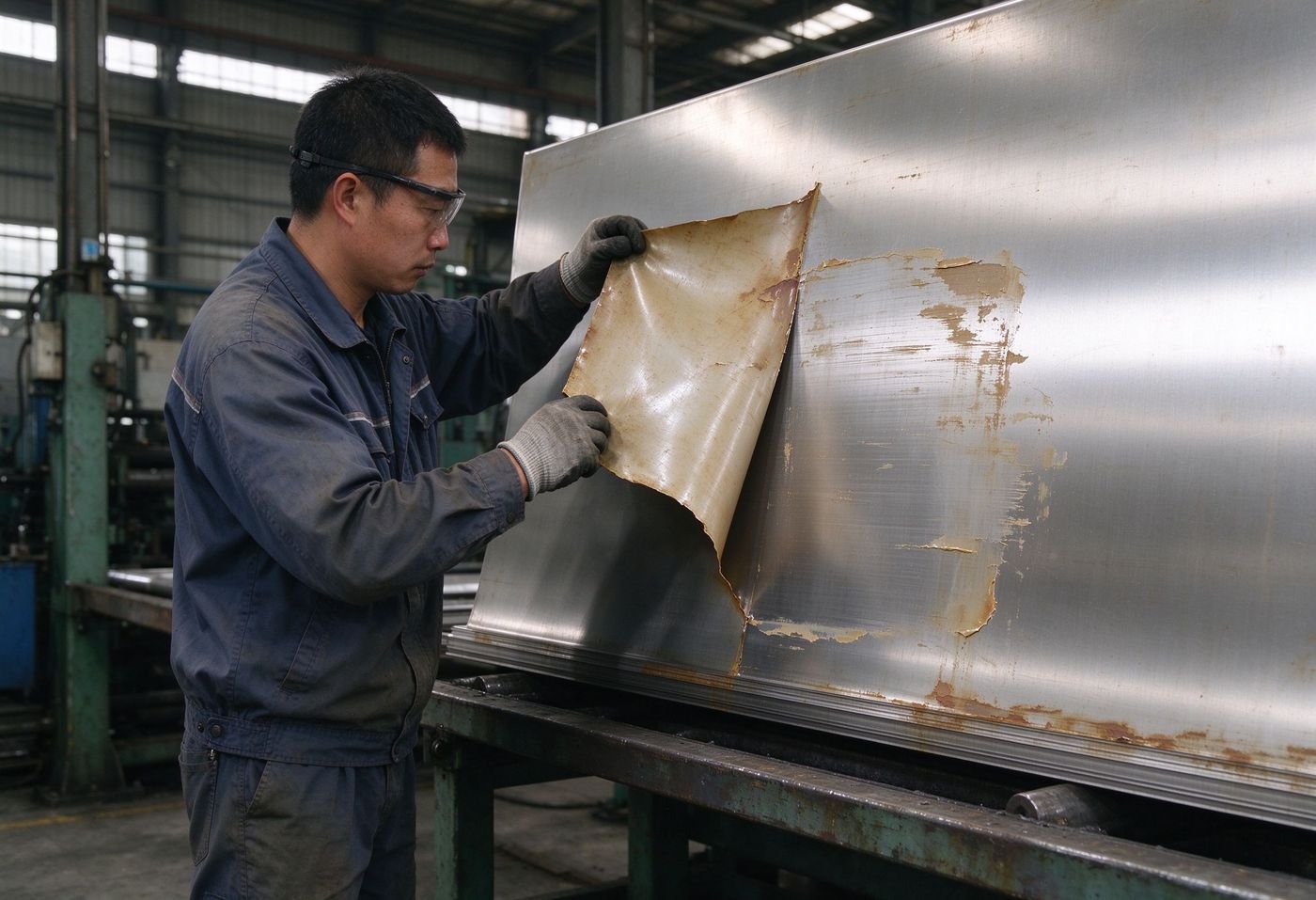
Residue on metal surfaces is one of the most common complaints about protective film. Adhesive left on stainless steel, aluminum, or coated panels means extra cleaning labor, rejected parts, and unhappy customers. The cause is rarely the film alone: it is almost always a mismatch between the film, the surface, and the environment. Understanding the causes lets you prevent the problem before it costs a production run.
Cause 1: Adhesive Deterioration From Heat and UV
Most protective film adhesives are acrylic or rubber-based, and both degrade when exposed to heat, direct sunlight, or humidity over time. A film rated for indoor storage fails quickly on a loading dock in summer. If the adhesive hardens or cross-links, it stops releasing cleanly and leaves a smear. Match the film to your real storage and transport conditions, not the ideal ones.
Cause 2: Wrong Tack for the Surface
Medium or heavy tack film applied to a low-energy surface, or film applied to a surface with fine texture, bonds unevenly. During removal, the adhesive separates and leaves residue in the valleys of the texture. Polished finishes need light-tack or adhesive-free film; matte and textured finishes need a product designed for them.
Cause 3: Aging and Overextended Storage
Film has a shelf life. Adhesive ages even inside a clean warehouse, and the product gets harder to remove the longer it stays on the part. Parts that sit in inventory for months after lamination are the most common source of residue complaints. Use short-life film for short cycles and longer-rated film only when the whole supply chain justifies it.
How to Prevent Residue
First, match tack to surface: light-tack for polished and powder-coated, medium-tack for brushed and matte. Second, control storage temperature and humidity. Third, respect the rated removal window and rotate stock. Fourth, test removal on a sample part before full production. These four rules eliminate most residue failures without changing your process.
FAQ
What is the best tack for stainless steel?
Light-tack or adhesive-free film for mirror and brushed stainless steel. Use medium-tack only for short protection windows and test first.
How long can film stay on metal?
It depends on the grade: 30–90 days is typical for indoor use. Check the manufacturer rating and remove before the adhesive cross-links.
How do I clean residue that is already there?
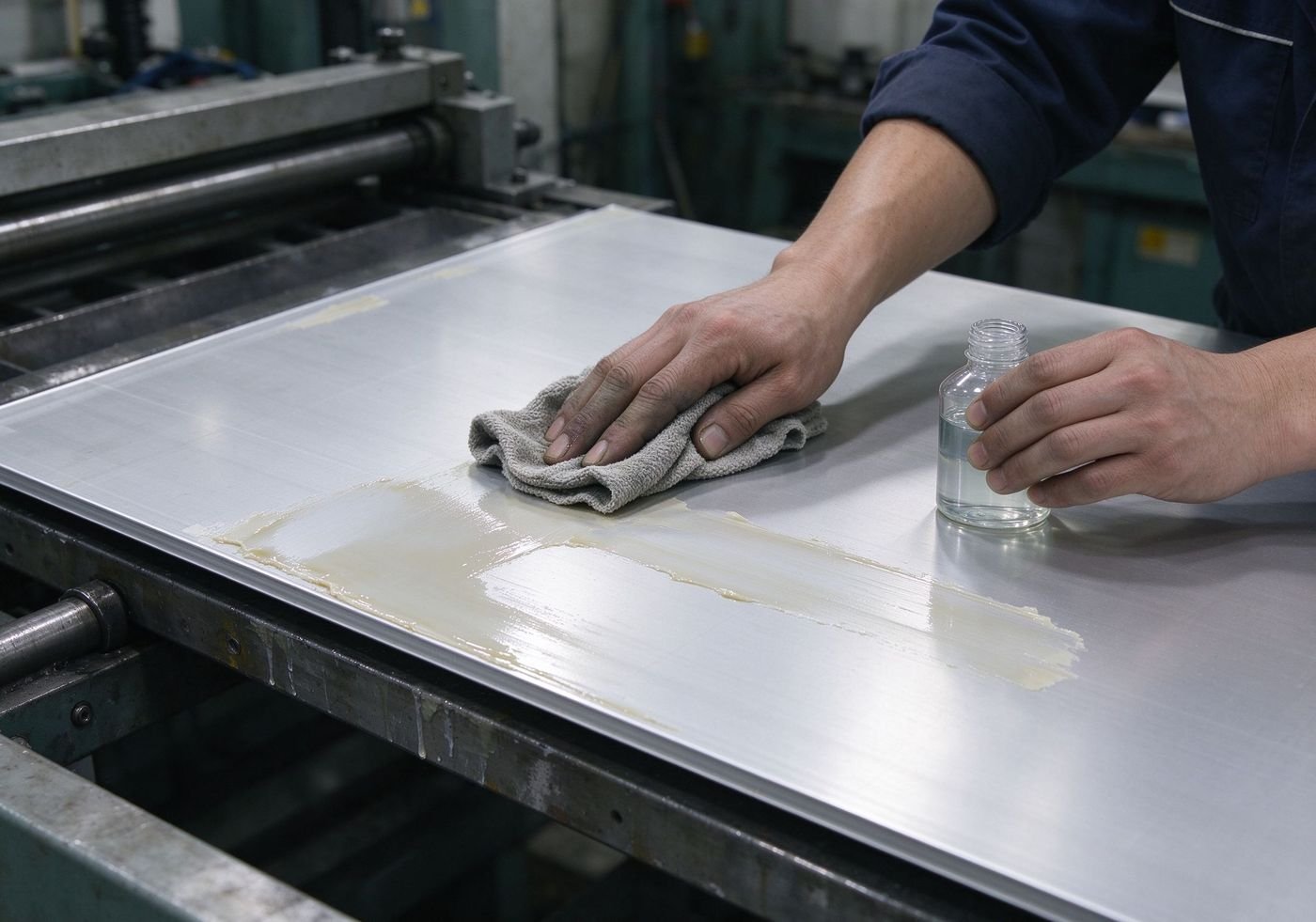
Use a solvent safe for the metal, such as isopropyl alcohol on stainless steel, plus a plastic scraper. Avoid abrasive pads on polished finishes.
Get a protective film specification recommendation from Chidecor: Read more